
How Off-Site Construction is Changing Traditional Build Schedules
Build schedules are harder to control than they used to be. Traditional construction often relies on long sequences of on-site work, which leaves projects exposed to delays and rising costs. As a result, homeowners and businesses are increasingly looking for more predictable ways to build. This is where off-site construction has emerged as a practical response.
What Is Off-Site Construction?
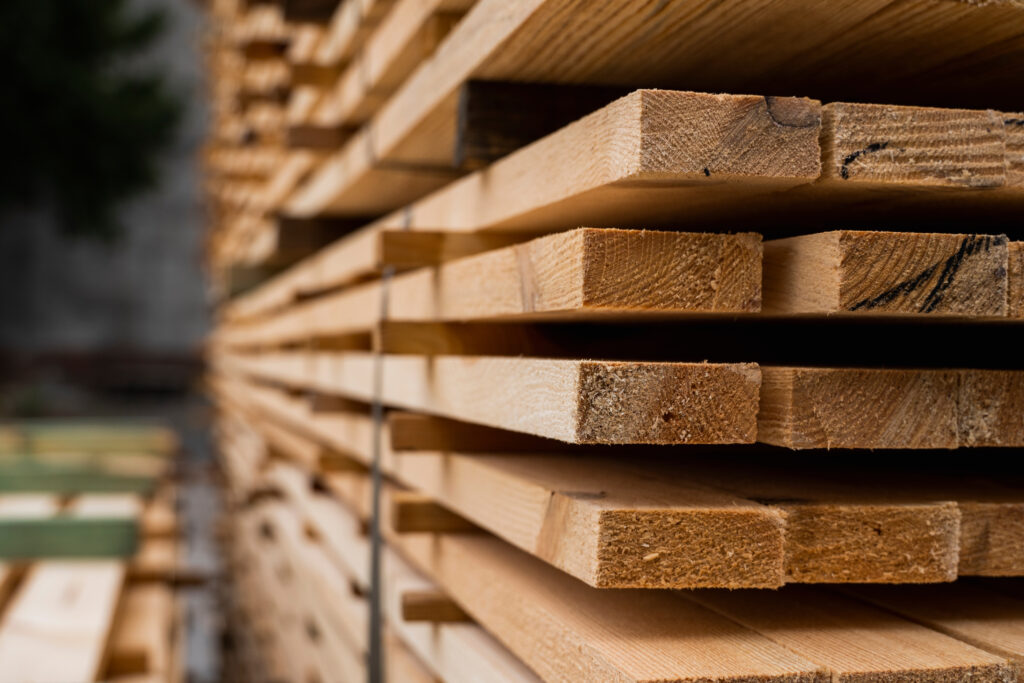
Off-site construction is a method where a building, or large parts of it, are manufactured away from the final location before being delivered for assembly. In a traditional build, most of the work happens on site, with each stage following the last. Off-site construction works differently.
While groundwork is prepared on site, the building is produced in a controlled environment at the same time. This reduces the amount of on-site labour required and limits exposure to delays that commonly affect conventional builds.
Where Time Is Usually Lost
Traditional build schedules tend to run in sequence. One trade finishes before the next can begin, which means even small delays can have a knock-on effect. If materials arrive late, access is restricted, or weather halts work, progress often slows across the entire programme. Over time, these interruptions can stretch a build well beyond its original timeline.
This isn’t usually down to poor workmanship, but to the way conventional construction is organised. With so much dependent on site conditions and availability, timelines can be difficult to fix with confidence from the outset.
How Off-Site Construction Changes the Timeline
Off-site construction changes the build timeline by removing much of the waiting that comes with traditional methods. Instead of work happening in a strict sequence, key stages run alongside one another. While the base is prepared on site, the building itself is manufactured elsewhere. This overlap alone can remove weeks from a typical schedule.
Once Installation Begins
With much of the work already completed before delivery, the amount of activity required on-site is reduced. Assembly is more concentrated, with fewer trades involved and fewer variables to manage. Buildings can be made watertight far sooner, which limits weather-related disruption and allows internal work to follow without delay.
The Advantage of Predictability
Delivery and installation are planned in advance, rather than being shaped day by day by site conditions. Shorter installation windows make it easier to coordinate access, minimise disruption and keep projects moving to plan. The result is a quicker build that is easier to schedule and control.
Why Predictability Matters More Than Speed
Knowing when a building will be delivered and installed makes planning far easier, whether it’s around home life or business operations. Off-site construction allows schedules to be set with more confidence, reducing downtime and last-minute changes.
For many buyers, that reliability offers better value than a fast build that still carries uncertainty.
Off-Site Construction in Real-World Applications
Off-site construction is often linked to large commercial projects, but it is just as effective on a smaller scale.
- It is widely used for garden-based buildings such as home workspaces and studios, where shorter installation times help limit disruption.
- The same approach suits commercial spaces, including offices and training rooms, where downtime needs to be kept to a minimum.
- In education and professional environments, off-site methods allow additional space to be created without ongoing interference.
In each case, the appeal lies in predictable delivery and a controlled period on site.
Is Off-Site Construction Right for Every Project?
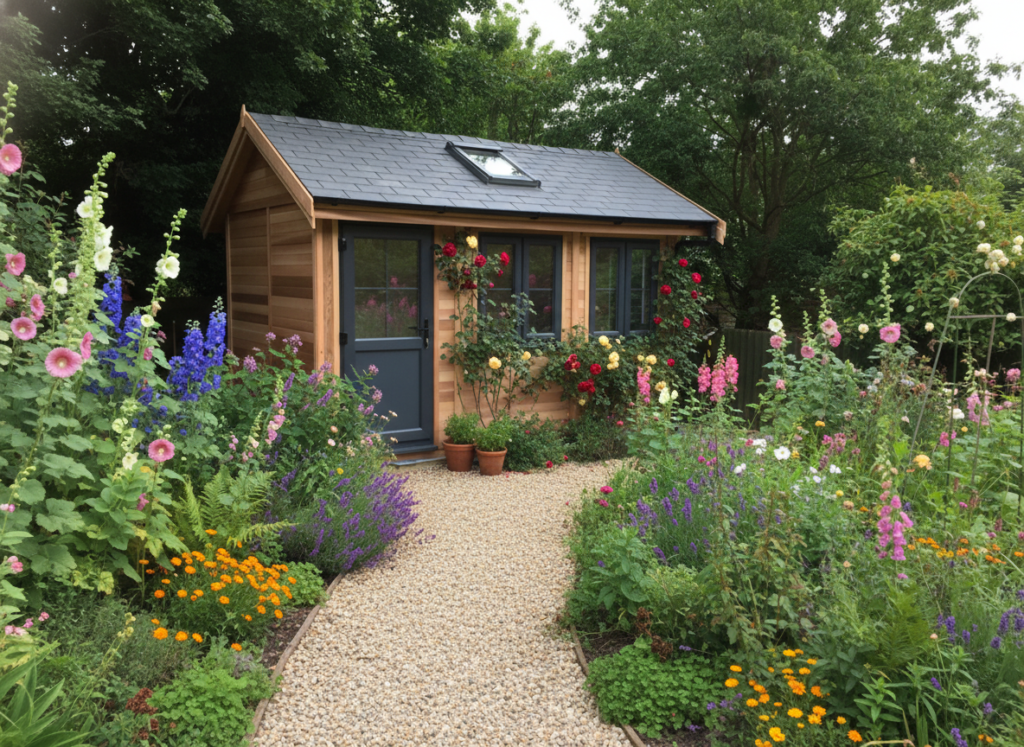
Off-site construction is not a one-size-fits-all solution. Groundwork is still required, and planning rules must be considered in the same way as any other build. Access to the site also plays a role, particularly for delivery and installation. That said, where these factors are understood from the outset, off-site construction can be a highly effective option.
Find a Smarter Way to Build
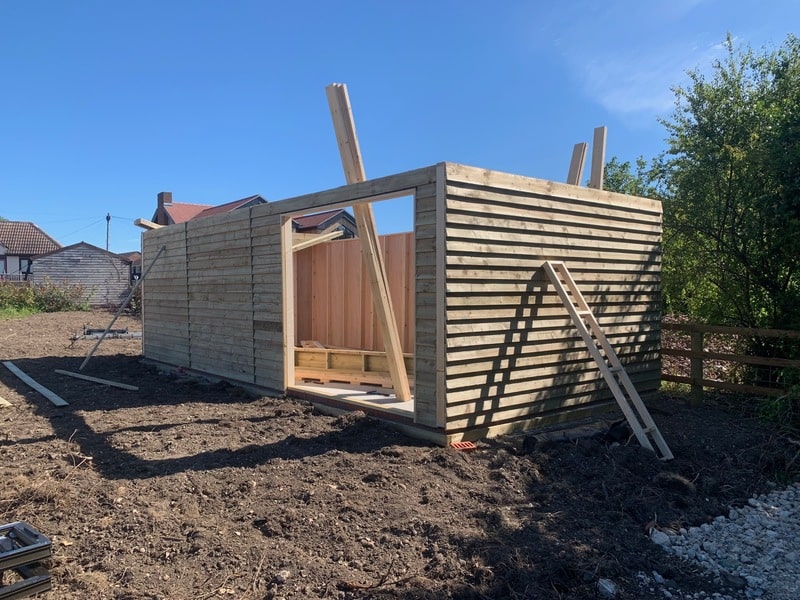
By completing much of the work before arriving on site, timelines become clearer and quality easier to maintain. This is why we prefabricate our garden rooms, offices, and garages, allowing buildings to be assembled efficiently on site while delivering a consistent standard of finish. It’s a smarter, more considered way to build.
FAQs: Off-Site Construction & Modular Garden Buildings
How long does it take to install a prefabricated garden building?
Most of our garden rooms and offices are installed within 1–2 days, depending on size and specification. Because the structure is built off-site, the bulk of the work is completed before we arrive.
Can off-site construction be customised to suit my needs?
Yes. Warwick Buildings offers a wide range of fully customisable designs using our online configurator, from layout and cladding to windows and electrics. Bespoke options are available too.
Do I still need to prepare the site before installation?
Yes. A level base – such as a concrete slab or ground screw foundation – is required before your building can be assembled. We can help coordinate this or provide guidance to your builder.
Is off-site construction suitable for year-round garden use?
Absolutely. Our buildings are fully insulated with high-quality materials, offering excellent thermal performance. They’re designed to be warm in winter and cool in summer, making them suitable for work, leisure, or business all year round.
Do off-site buildings require planning permission?
In most cases, no – provided the building is under 2.5m high and within your rear garden. However, permission may be needed in listed properties, conservation areas, or if the use falls outside permitted development.
What types of projects benefit most from off-site construction?
Any project that would benefit from minimal on-site disruption. That includes home offices, therapy rooms, classrooms, garden studios, and small commercial units – especially when time and certainty are priorities.
Is the quality as good as traditional builds?
Yes. Prefabrication in a controlled environment often leads to higher consistency and quality. Warwick Buildings uses Scandinavian timber, factory-fitted electrics, and double-glazed windows to ensure each building meets a high standard.